
This manual details the 2014 Ford F-150’s operation, maintenance, and safety features. It covers everything from vehicle identification to troubleshooting common issues.
Overview of the 2014 F-150
The 2014 Ford F-150 represents a robust and versatile full-size pickup truck, continuing a long tradition of American automotive engineering. Available in numerous configurations – including various cab sizes, bed lengths, and trim levels – the F-150 catered to a wide spectrum of user needs, from work-focused applications to personal transportation.
Powering the 2014 F-150 were several engine options, including a 3.7L V6, 5.0L V8, 6.2L V8, and the popular 3.5L EcoBoost V6, each offering a unique balance of power and fuel efficiency. This model year maintained Ford’s commitment to durability and capability, making it a staple for both commercial and private owners. Understanding its features is key, and this manual provides essential guidance.
Importance of the Owner’s Manual
This owner’s manual is an indispensable resource for all 2014 Ford F-150 owners. It provides detailed instructions on operating your vehicle safely and efficiently, maximizing its lifespan and performance. Ignoring the guidance within can lead to improper use, potential damage, and compromised safety features.
The manual covers everything from routine maintenance schedules and fluid checks to understanding dashboard indicators and troubleshooting common issues. Familiarizing yourself with its contents ensures you’re equipped to handle various situations, maintain warranty coverage, and fully appreciate the capabilities of your F-150. It’s a vital tool for responsible vehicle ownership.
Understanding Your Vehicle
This section details key aspects of your 2014 F-150, including the VIN, dashboard symbols, and features of the key and remote control systems.
Vehicle Identification Number (VIN) and Labels
Locating your 2014 Ford F-150’s Vehicle Identification Number (VIN) is crucial for various reasons, including warranty claims, theft recovery, and vehicle history reports. The VIN is a unique 17-character code specific to your truck. You’ll find it on the driver’s side dashboard, visible through the windshield.
Additional VIN labels are located on the driver’s side doorjamb and in the owner’s manual. These labels also contain important information about your vehicle’s manufacturing date, assembly plant, and original specifications. Understanding these labels ensures accurate record-keeping and facilitates efficient service when needed. Keep your VIN readily accessible for quick reference.
Dashboard Symbols and Indicators
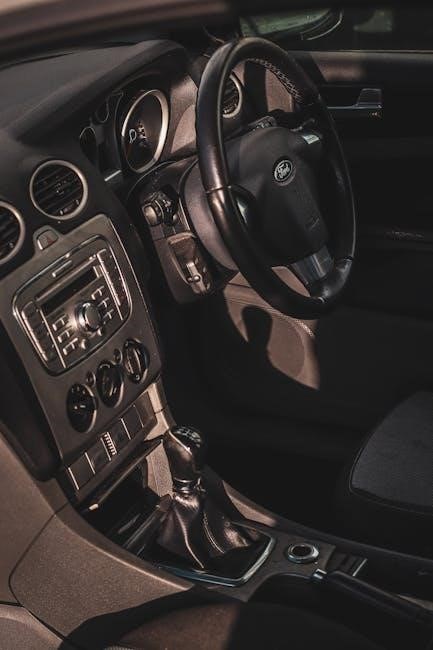
The 2014 Ford F-150’s dashboard features a variety of symbols and indicators providing vital information about your vehicle’s status. Familiarizing yourself with these is essential for safe operation. Warning lights, such as the check engine light, illuminate to signal potential mechanical issues requiring attention.
Informational lights indicate the status of systems like headlights, turn signals, and cruise control. Gauges display speed, engine RPM, fuel level, and coolant temperature. Understanding the meaning of each symbol allows you to proactively address concerns and maintain optimal vehicle performance. Consult the owner’s manual for a comprehensive explanation of all dashboard indicators.
Key and Remote Control Features
The 2014 Ford F-150 utilizes a keyless entry system with remote functions for convenience and security. Your key or remote allows locking/unlocking doors, activating the panic alarm, and remotely starting the engine (if equipped). Programming additional remotes requires a specific procedure outlined in the owner’s manual.
The key also houses a transponder chip for anti-theft protection. Features like keyless entry and remote start enhance usability. Understanding the range and limitations of the remote is crucial. Always safeguard your keys and remotes to prevent unauthorized access to your vehicle. Battery replacement instructions are detailed within the manual.

Operating Your Vehicle
This section details starting, driving, and utilizing the 2014 Ford F-150’s systems. Learn about 4×4 operation, transmission specifics, and the braking system effectively.
Starting and Stopping the Engine
Starting your 2014 Ford F-150 is generally straightforward, but understanding the nuances ensures smooth operation. Ensure the parking brake is engaged, and the transmission is in Park or Neutral. Insert the key into the ignition and turn it to the ‘Start’ position, releasing once the engine ignites. For vehicles equipped with push-button start, firmly press the brake pedal and then press the start button.
To stop the engine, shift the transmission into Park and turn the ignition key to the ‘Off’ position, or press the start/stop button. Allow the engine to fully stop before removing the key or exiting the vehicle. Avoid prolonged idling, as it can impact fuel efficiency and potentially lead to engine overheating. Always follow these procedures for safe and reliable engine operation.
Driving Modes and Systems (e.g., 4×4)
The 2014 Ford F-150 offers various driving modes to optimize performance for different conditions. These include 2H (two-wheel drive, standard), 4H (four-wheel drive, high range), 4L (four-wheel drive, low range), and potentially an electronic locking rear differential on certain trims. Engaging 4×4 improves traction on slippery surfaces like snow, ice, or loose gravel.
To shift into 4H or 4L, ensure you are traveling at a low speed. The procedure typically involves rotating a selector dial or engaging an electronic switch. 4L provides increased torque for challenging terrain. Disengage 4×4 when driving on dry pavement to avoid drivetrain damage. Consult your owner’s manual for specific instructions related to your vehicle’s configuration.
Transmission Operation (Manual Transmission Specifics)
The 2014 Ford F-150’s manual transmission features a traditional shift pattern, typically a six-speed configuration. Smooth and precise shifting is crucial for optimal performance and longevity. Depress the clutch pedal fully before each gear change, and coordinate the clutch release with throttle input. Avoid “speed shifting” or forcing the gear lever.
Proper downshifting is essential for engine braking and maintaining control, especially during descents. Be mindful of engine RPMs to prevent over-revving or stalling. Regularly check the manual transmission fluid level and condition, as specified in the maintenance schedule, to ensure smooth operation and prevent premature wear.
Braking System and Anti-lock Brakes
The 2014 Ford F-150 is equipped with a hydraulic braking system, enhanced by an Anti-lock Braking System (ABS). ABS prevents wheel lockup during hard braking, allowing you to maintain steering control. When ABS activates, you may feel a pulsing sensation in the brake pedal – this is normal.
Maintain firm and steady pressure on the brake pedal during ABS activation. Do not pump the brakes. Regularly inspect brake pads, rotors, and brake lines for wear and damage. Ensure the brake fluid level is adequate and the fluid is in good condition, as outlined in the maintenance schedule. Prompt brake service is vital for safety.

Maintenance and Care
Regular maintenance ensures your 2014 F-150’s reliability and longevity. This section details schedules for fluid checks, tire care, and essential component upkeep.
Recommended Maintenance Schedule
Maintaining your 2014 Ford F-150 requires adherence to a specific schedule for optimal performance and longevity. Every 5,000 miles (or six months), oil and filter changes are crucial, alongside tire rotation and inspection. At 15,000 miles, add cabin air filter replacement and a thorough brake system inspection.
By 30,000 miles, coolant flushing becomes necessary, alongside fuel filter replacement. Inspect belts and hoses for wear. A more comprehensive inspection, including suspension components and steering linkage, should occur at 60,000 miles. Following this schedule, detailed within the owner’s manual, helps prevent costly repairs and ensures a safe driving experience. Remember severe driving conditions may necessitate more frequent servicing.
Fluid Checks and Replacements (Oil, Coolant, etc.)
Regularly checking and replacing fluids is vital for your 2014 Ford F-150’s health. Engine oil should be checked weekly and replaced every 5,000-7,500 miles, depending on oil type and driving conditions. Coolant levels should be inspected monthly, with a complete flush and refill every 30,000 miles.
Brake fluid requires inspection every six months, and replacement every two to three years. Power steering fluid should also be checked periodically. Transmission fluid, particularly in manual models, needs monitoring and eventual replacement as per the owner’s manual. Maintaining proper fluid levels ensures optimal component function and prevents premature wear and tear.

Tire Maintenance and Replacement
Proper tire maintenance is crucial for the 2014 Ford F-150’s safety and performance. Check tire pressure monthly and adjust to the recommended PSI found on the driver’s side doorjamb. Inspect tires for wear and damage, including cuts, bulges, and uneven tread wear. Rotate tires every 5,000-8,000 miles to promote even wear and extend their lifespan.
Replace tires when tread depth reaches 2/32 of an inch, or if damage is present. Ensure replacement tires match the original size and load rating. Regularly inspect the spare tire as well. Correct tire inflation and condition contribute to optimal handling, braking, and fuel efficiency.
Battery Maintenance and Jump Starting
Maintaining your 2014 Ford F-150’s battery ensures reliable starting. Regularly inspect the battery terminals for corrosion and clean them with a wire brush if necessary. Ensure the battery is securely mounted. Extreme temperatures can affect battery performance, so be mindful in very hot or cold weather.
If the battery is discharged, jump-starting is possible. Use jumper cables, connecting positive (+) to positive and negative (-) to a grounded metal surface on the disabled vehicle. Follow the proper sequence to avoid sparks. A failing battery should be replaced promptly to prevent unexpected breakdowns.
Mechanical Components
The 2014 F-150 features robust engine, transmission, and suspension systems. Detailed specifications and performance characteristics are outlined for optimal understanding and maintenance.
Engine Specifications and Performance
The 2014 Ford F-150 offered a variety of engine options, catering to diverse needs and applications. These included a 3.7L V6, a 5.0L V8, a 6.2L V8, and the popular 3.5L EcoBoost V6. The 3.7L V6 produced around 302 horsepower and 278 lb-ft of torque, suitable for everyday tasks. The 5.0L V8 delivered approximately 385 horsepower and 387 lb-ft of torque, offering enhanced capability.
For those requiring substantial power, the 6.2L V8 generated around 405 horsepower and 405 lb-ft of torque. The 3.5L EcoBoost V6, utilizing turbocharging, provided an impressive 365 horsepower and 420 lb-ft of torque, balancing power and efficiency. Each engine was designed for durability and reliable performance, contributing to the F-150’s reputation as a capable work truck.
Transmission Details (Manual Transmission)
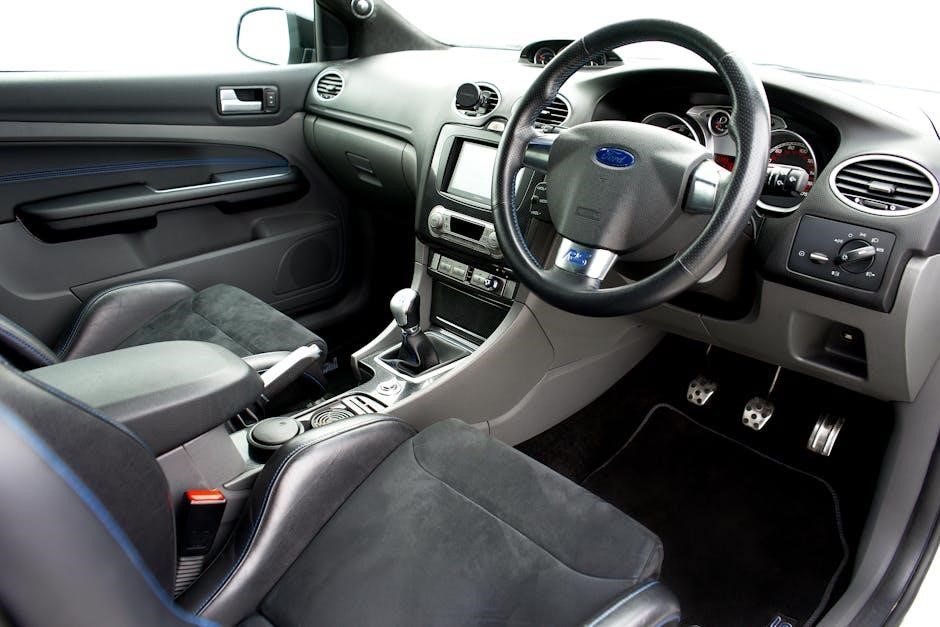
While less common, the 2014 Ford F-150 was available with a six-speed manual transmission, primarily paired with the 3.7L V6 engine. This transmission offered drivers a more engaging driving experience and direct control over gear selection. It featured a robust design intended for both daily driving and demanding work applications.
The manual transmission included features like a precise shift linkage and a heavy-duty clutch to handle the engine’s torque output. Proper shifting technique is crucial for smooth operation and longevity. Regular maintenance, including fluid checks and changes, is essential to ensure optimal performance and prevent premature wear. This transmission provided a distinct alternative to the automatic options.
Suspension and Steering System
The 2014 Ford F-150’s suspension system was designed for a balance of ride comfort and hauling capability. It typically featured a coil-over-shock front suspension and leaf spring rear suspension, varying slightly based on cab configuration and payload packages; This setup allowed for substantial load carrying while maintaining reasonable on-road manners.
Steering was generally hydraulic power-assisted, providing responsive control. Different F-150 trims offered variations in suspension tuning, with heavier-duty options available for increased towing and payload capacity; Regular inspection of suspension components, like shocks and leaf springs, is vital for maintaining vehicle stability and handling. Proper alignment is also crucial for tire wear and optimal steering response.

Safety Features
The 2014 F-150 included airbags, seatbelts, stability control, and traction control as standard safety equipment. These systems work together to protect occupants.
Airbag System
The 2014 Ford F-150’s airbag system is a crucial component of its overall safety design. It’s engineered to work with seatbelts to provide enhanced occupant protection during a collision. The system includes front airbags for both driver and passenger, as well as side-impact airbags mounted in the seats.
Curtain airbags are also present, offering head protection in side collisions and rollovers. Sensors strategically placed throughout the vehicle detect the severity and type of impact, deploying airbags accordingly. Proper seatbelt usage is essential for the airbag system to function effectively. Regularly inspect the airbag system for any warning lights, and consult a qualified technician for any concerns or repairs. Ignoring airbag system warnings can compromise safety.
Safety Restraints (Seatbelts)
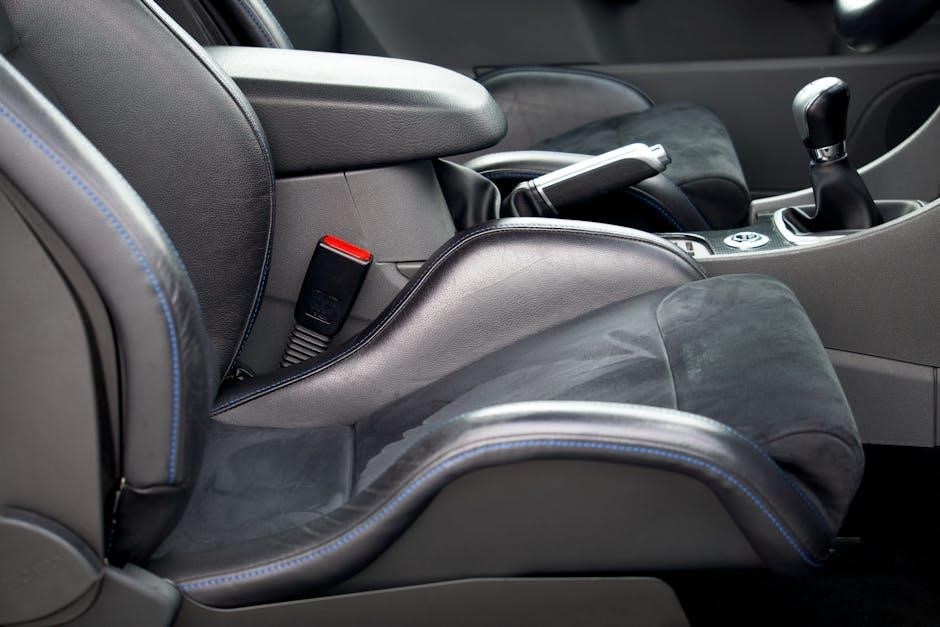
Seatbelts are the primary safety restraint system in your 2014 Ford F-150, and their proper use is paramount for occupant protection during a collision. They are designed to secure occupants, preventing ejection and minimizing impact forces. All seating positions are equipped with three-point seatbelts, featuring adjustable shoulder straps and lap belts.
Always ensure all passengers are correctly fastened before driving. Seatbelts should fit snugly across the hips and chest, not the stomach or neck. Regularly inspect seatbelts for damage, such as fraying or tears, and replace them if necessary. The F-150 also features seatbelt pretensioners, which tighten the belts instantly during a crash. Ignoring seatbelt safety can lead to severe injuries.
Stability Control and Traction Control
Your 2014 Ford F-150 is equipped with AdvanceTrac® with Roll Stability Control (RSC) and Traction Control System (TCS). These systems enhance vehicle stability and control, particularly in challenging driving conditions. RSC helps prevent rollovers by selectively braking individual wheels, while TCS limits wheel spin during acceleration.
These systems are generally active all the time, but can be temporarily disabled via a button on the dashboard. However, it’s recommended to keep them enabled for optimal safety. The systems utilize sensors to monitor wheel speed, steering angle, and yaw rate. Understanding these features is crucial for safe operation, especially when towing or driving on slippery surfaces.

Troubleshooting
This section provides solutions for common 2014 F-150 issues and explains warning light meanings. It assists owners in diagnosing and resolving minor vehicle problems.
Common Issues and Solutions
Several common issues may arise with the 2014 Ford F-150. One frequent complaint involves the blend door actuator, causing inconsistent temperature control – replacement is often necessary. Another is the door lock actuator failing, preventing locking/unlocking. Intermittent no-start conditions can stem from a faulty fuel pump driver module;
For warning lights, a flashing check engine light indicates a severe issue needing immediate attention; A solid check engine light requires diagnostic scanning. Issues with the transmission can manifest as harsh shifting or slipping; fluid checks are crucial. Regularly inspecting and maintaining these components can prevent larger, more costly repairs down the road, ensuring reliable operation.
Warning Lights and Their Meanings
The 2014 Ford F-150 utilizes a comprehensive system of warning lights to alert drivers to potential issues. A solid illuminated Check Engine light signals a problem requiring diagnosis via an OBD-II scanner. A flashing Check Engine light indicates a severe issue, potentially damaging the catalytic converter.
The ABS light illuminates if there’s a problem with the anti-lock braking system. A low tire pressure light indicates insufficient pressure in one or more tires. The battery light signifies a charging system malfunction. Ignoring these warnings can lead to more significant damage; consult a qualified mechanic promptly for proper assessment and repair.

Specifics for Manual Transmission Models
This section focuses on the unique aspects of the 2014 F-150’s manual transmission, including clutch operation, shifting techniques, and fluid maintenance.
Clutch Operation and Adjustment
Proper clutch operation is crucial for smooth shifting and preventing premature wear in your 2014 Ford F-150. The clutch engages and disengages power from the engine to the transmission. Fully depress the clutch pedal before shifting gears to ensure complete disengagement.
Release the pedal smoothly and progressively to re-engage power, avoiding abrupt starts or jerking motions. If the clutch feels spongy or doesn’t fully disengage, adjustment may be necessary. Consult a qualified technician for clutch adjustment procedures, as incorrect adjustments can lead to damage. Regularly inspect the clutch pedal for free play and responsiveness; Maintaining a properly functioning clutch extends the life of your transmission and enhances driving comfort.
Shifting Techniques
Mastering shifting techniques in your 2014 Ford F-150 manual transmission ensures optimal performance and longevity. Coordinate clutch pedal operation with gear selection for seamless transitions. Downshift before entering curves or slowing down to maintain engine braking and control.
Avoid lugging the engine by shifting to a lower gear when speed decreases. When upshifting, release the accelerator, depress the clutch, select the next higher gear, and smoothly release the clutch while applying throttle. Practice smooth, deliberate shifts to minimize wear on the synchronizers. Double-clutching isn’t necessary for normal driving but can be useful for smoother shifts in certain situations.
Manual Transmission Fluid Change
Regularly changing the manual transmission fluid in your 2014 Ford F-150 is crucial for smooth operation and preventing premature wear. Consult your owner’s manual for the recommended fluid type and change interval. Typically, this involves draining the old fluid, replacing the fill plug, and carefully filling with the specified quantity of new fluid.
Ensure the vehicle is level and the transmission is at the correct operating temperature. Use a hand pump to avoid overfilling. After refilling, check the fluid level and test drive the vehicle, then recheck. Properly dispose of the used fluid at a recycling center.
Warranty Information
Your 2014 Ford F-150 is covered by a limited warranty, including roadside assistance. Details regarding coverage duration and exclusions are found within this manual.
Warranty Coverage Details
The 2014 Ford F-150’s warranty provides coverage for defects in materials or workmanship. This includes a bumper-to-bumper warranty for 3 years/36,000 miles, whichever comes first. Powertrain coverage extends to 5 years/60,000 miles, safeguarding the engine, transmission, and drive systems.
Separate warranties cover corrosion (5 years/unlimited miles) and safety restraints (10 years/100,000 miles). Specific exclusions apply, such as wear-and-tear items and damage from misuse. Always retain your warranty documentation and service records. Refer to the complete warranty guide for a comprehensive understanding of your vehicle’s protection, including claim procedures and authorized service locations.
Roadside Assistance
Ford provides roadside assistance with the 2014 F-150, offering peace of mind during unexpected breakdowns. Services include towing (up to a specified distance), jump starts, tire changes, fuel delivery, and lockout assistance. Coverage is typically active for a defined period, often coinciding with the new vehicle warranty.
To access roadside assistance, retain your vehicle identification number (VIN) and contact Ford’s dedicated assistance line. Be prepared to provide your location and a description of the issue. Some services may have limitations or associated costs beyond the initial coverage period. Review your owner’s manual for specific details and contact information.