
Rival Ice Cream Maker Manual: A Comprehensive Guide
Discover the delightful world of homemade frozen treats! This manual provides detailed instructions for Rival ice cream makers, covering models from vintage to modern designs.
Welcome to the world of homemade ice cream, yogurt, and sorbet with Rival! For generations, Rival has been a trusted name in kitchen appliances, bringing the joy of frozen desserts directly into homes. These machines empower you to create customized treats, controlling ingredients and flavors to suit every palate.
Rival ice cream makers range from compact, single-quart models to larger, family-sized options. Whether you’re a seasoned dessert enthusiast or a beginner, a Rival machine offers a convenient and rewarding experience. This guide will navigate you through operation, maintenance, and troubleshooting, ensuring delicious results every time.
History of Rival and Their Ice Cream Machines
Rival, a company with a rich heritage, has been crafting quality home appliances for decades. While initially known for other kitchen staples, Rival’s foray into frozen dessert makers brought accessible ice cream creation to households nationwide. Vintage Rival ice cream and yogurt freezers, like the Model 8401, became kitchen icons, prized for their reliability and simplicity.
Over time, Rival adapted to evolving consumer needs, introducing electric models with improved features and capacities. Today, Rival continues to innovate, offering a range of ice cream makers designed for convenience and delicious results, maintaining its commitment to quality and affordability.
Popular Rival Ice Cream Maker Models
Rival offers a diverse lineup of ice cream makers to suit various needs. The Model 8200 is a classic, known for its straightforward operation. The Model 8401, a vintage favorite, remains popular for its durability. For larger batches, the Model 8420 TP, a 4-quart electric maker, provides ample capacity.
The Model 8550, featuring a 5-quart capacity and specialized mixing paddle, is ideal for frequent ice cream enthusiasts. These models, alongside gel canister options like the GC9155, demonstrate Rival’s commitment to providing choices for every frozen dessert lover.
Model 8200: Features and Usage
The Rival Model 8200 is celebrated for its simplicity and reliability. This model typically utilizes a dasher and canister system, requiring pre-freezing of the canister for optimal results. Users appreciate its compact design and ease of assembly. Before operation, ensure all parts are clean and properly connected.
To use, prepare your ice cream mixture, pour it into the frozen canister, and activate the motor. The dasher continuously churns the mixture, incorporating air and creating a smooth texture. Follow recipe guidelines for best results, and enjoy homemade ice cream!

Model 8401: A Detailed Overview

The Rival Model 8401 is a popular choice for homemade ice cream, yogurt, and sorbet. This electric model features a 4-quart capacity, making it suitable for family-sized batches. It utilizes a double-walled canister that requires freezing for at least 24 hours prior to use. The motor directly drives the mixing paddle, ensuring efficient churning.
Safety is paramount; always read instructions before use. Proper assembly and cleaning are crucial for longevity. The 8401’s straightforward design makes it user-friendly, delivering delicious frozen desserts with minimal effort.
Model 8420 TP: 4 Quart Electric Ice Cream Maker
The Rival Model 8420 TP is a 4-quart electric ice cream maker, proudly made in the USA. This purple-hued appliance simplifies homemade frozen dessert creation. Like other Rival models, it relies on a pre-frozen canister – ensuring optimal freezing during the churning process. Its electric motor powers the dasher, effectively mixing ingredients to a smooth consistency.
This model is known for its ease of use and reliable performance. Flash sales and limited-time offers frequently appear for this sought-after vintage appliance, making it a great value.
Model 8550: 5 Quart Mixing Paddle Details
The Rival Model 8550 utilizes a specialized mixing paddle, crucial for achieving perfectly churned ice cream. This paddle is designed for the 5-quart capacity of the machine, ensuring efficient ingredient incorporation. It features a metallic end, contributing to its durability and effective mixing action. Often sold separately, replacement paddles are available for continued use.
Maintaining a functional paddle is vital for consistent results. A properly functioning paddle guarantees a smooth, creamy texture, avoiding ice crystals. It’s an essential component for any Rival 8550 owner.
Understanding the Components
Rival ice cream makers consist of key components working in harmony. The motor unit, models FRRVCB40 and 8401, provides the power for churning; The gel canister, pre-frozen, is where the magic happens – it rapidly freezes the ice cream mixture. Mixing paddles, or dashers, are essential for incorporating air and creating a smooth consistency.
Understanding each part’s function is crucial for successful operation. Proper assembly and maintenance of these components ensure optimal performance and longevity of your Rival ice cream maker.
The Motor Unit: Models FRRVCB40 and 8401
The motor unit is the heart of your Rival ice cream maker, available in models FRRVCB40 and 8401. These motors are designed to rotate the dasher within the frozen gel canister, effectively churning the ingredients. Ensuring the motor is securely attached and receives power is paramount for operation.
Used motors are frequently available, often tested for functionality. Always prioritize electrical safety when handling the motor unit, and refer to the safety precautions section of this manual before use.
The Gel Canister and its Function
The gel canister is a crucial component, responsible for maintaining the low temperature needed to freeze your ice cream mixture. Rival offers various canister sizes, including 1-quart (GC9155) and larger 1.5-quart options. Before each use, the canister must be thoroughly frozen for at least 24 hours to ensure optimal performance.
This pre-freezing process allows the canister to absorb sufficient cold, enabling effective ice cream creation. Proper freezing is key to achieving the desired consistency and preventing a soupy final product.
Mixing Paddles and Dashers: Types and Compatibility
Rival ice cream makers utilize mixing paddles, sometimes called dashers, to churn and aerate the ice cream base as it freezes. Model 8550 features a 5-quart mixing paddle with a metallic end, designed for larger batches. Compatibility varies; ensure the paddle is specifically designed for your model.
Using the correct paddle is vital for achieving a smooth, consistent texture. Incorrect paddles may not effectively scrape the frozen mixture from the canister walls, resulting in icy or uneven ice cream.
Safety Precautions
When operating your Rival ice cream maker, prioritize safety. Always read all instructions thoroughly before use to prevent electrical shock or injury. Ensure the appliance is properly grounded and avoid operating with a damaged cord. Never immerse the motor unit in water or other liquids.
Keep children supervised when the machine is in operation. Disconnect the appliance from the power source before cleaning or disassembling. Basic safety precautions are essential for a safe and enjoyable ice cream-making experience.
Electrical Safety Guidelines
To protect against electrical hazards, never operate the Rival ice cream maker with a damaged cord or plug. Avoid using extension cords if possible; if necessary, ensure it’s appropriately rated for the appliance’s wattage. Always unplug the unit before cleaning, disassembling, or storing.
Do not operate the appliance outdoors or in damp environments. If the motor unit falls into water, do not attempt to retrieve it – disconnect power immediately. Regular inspection of the cord for damage is crucial for safe operation.
General Usage Safety Tips
Always read all instructions thoroughly before operating your Rival ice cream maker. Ensure the canister is properly frozen before assembly – insufficient freezing will prevent ice cream formation. Never operate the machine without the dasher installed, as it’s essential for proper churning.
Avoid overfilling the canister, leaving space for expansion during freezing. Do not attempt to disassemble the unit while the motor is running. Keep children away during operation and supervise their use if they are assisting.
Preparing Your Ingredients
Successful homemade ice cream begins with quality ingredients! Chill your base mixture thoroughly – at least two hours, or preferably overnight – for faster freezing and a smoother texture. Recipes range from classic vanilla to exciting yogurt and sorbet variations.
Ensure sugar is fully dissolved before churning to prevent a grainy consistency. Adjust sweetness to your preference, remembering that freezing dulls flavors slightly. Experiment with additions like fruit, chocolate chips, or nuts after the initial churn for even distribution.
Basic Ice Cream Recipes
Vanilla Bean Ice Cream: Combine 2 cups heavy cream, 1 cup milk, ¾ cup sugar, and 1 vanilla bean (split and scraped) in a saucepan. Heat gently, stirring until sugar dissolves. Cool completely, then chill.
Chocolate Ice Cream: Use the vanilla base, adding ½ cup unsweetened cocoa powder and ¼ cup melted chocolate. Strawberry Ice Cream: Puree 1 pint strawberries and add to the chilled base. Remember to adjust sugar levels based on fruit sweetness. Churn according to your Rival model’s instructions!
Yogurt and Sorbet Recipes
Creamy Yogurt: Blend 2 cups plain yogurt (Greek style recommended), ½ cup milk, and ¼ cup honey. Chill thoroughly before churning in your Rival machine for a tangy, refreshing treat.
Lemon Sorbet: Combine 1 cup water, 1 cup sugar, and the juice of 6 lemons. Heat until sugar dissolves, cool, and strain. Berry Sorbet: Puree 2 cups mixed berries with ½ cup water and ¼ cup sugar. Churn until slushy. Adjust sweetness to taste – enjoy these lighter alternatives!
Operating Instructions
Before you begin, ensure the gel canister is fully frozen – typically 16-24 hours. Assemble the ice cream maker by securely attaching the motor unit to the canister. Pour your chilled ice cream base into the frozen canister, avoiding overfilling.
Plug in the machine and allow it to churn for 20-30 minutes, or until the mixture reaches your desired consistency; Monitor closely; the time varies based on the recipe and ambient temperature. Stop the motor and enjoy your freshly made dessert!
Assembling the Ice Cream Maker
Begin by placing the frozen gel canister securely on a flat, stable surface. Next, carefully insert the mixing paddle or dasher into the canister, ensuring it fits snugly and rotates freely. Align the motor unit with the canister, typically by locating the designated grooves or mounting points.
Gently lower the motor unit onto the canister, twisting or locking it into place as indicated in your model’s specific instructions. Verify a secure connection before proceeding to avoid operational issues during churning.
The Freezing Process: Step-by-Step
Prior to assembly, ensure the gel canister is thoroughly frozen – ideally for at least 24 hours. Once assembled, pour your prepared ice cream mixture into the frozen canister, leaving sufficient space at the top for expansion during churning. Power on the motor unit, initiating the freezing process.
Allow the mixture to churn for approximately 20-30 minutes, or until it reaches your desired consistency. Monitor the process, and avoid overfilling the canister to prevent spillage or incomplete freezing.
Churning and Achieving the Right Consistency

Effective churning is vital for creating smooth, creamy ice cream. The Rival ice cream maker’s dasher continuously mixes and scrapes the frozen mixture from the canister walls, preventing large ice crystals from forming. Observe the mixture’s transformation; it will thicken as it freezes.
The ideal consistency resembles soft-serve ice cream. For a firmer texture, transfer the churned ice cream to a freezer-safe container and harden for a couple of hours. Avoid prolonged churning, as this can result in a grainy texture.

Cleaning and Maintenance
Regular cleaning ensures optimal performance and longevity of your Rival ice cream maker. Always unplug the unit before disassembly. Wash the gel canister, dasher, and motor housing with warm, soapy water after each use. Avoid abrasive cleaners, which can damage surfaces.
Thoroughly dry all components before reassembling. The motor unit should be wiped clean with a damp cloth; never immerse it in water. Store the ice cream maker in a cool, dry place when not in use, ensuring all parts are completely dry.
Disassembling for Cleaning
Before cleaning, carefully disassemble your Rival ice cream maker. Gently remove the dasher from the gel canister. Detach the motor housing from the canister – typically a simple twist-and-lift action. For models with multiple parts, consult your specific model’s diagram.
Be mindful of any locking mechanisms or clips. Avoid forcing components apart. Once disassembled, inspect each part for any remaining ice cream residue; Proper disassembly facilitates a more thorough and hygienic cleaning process, extending the life of your appliance.
Proper Cleaning Procedures
Wash all removable parts – the gel canister, dasher, and any lids – with warm, soapy water. Avoid abrasive cleaners, as they can damage the surfaces. The motor housing should be wiped down with a damp cloth; never immerse it in water! Ensure all soap residue is thoroughly rinsed away.
Allow parts to air dry completely before reassembling. For stubborn residue, a mild solution of baking soda and water can be effective. Regular, proper cleaning prevents bacterial growth and ensures optimal performance.
Storage Instructions
Before storing your Rival ice cream maker, ensure all components are completely dry. Store the motor unit in a cool, dry place, away from direct sunlight and extreme temperatures. The gel canister and dasher can be stored together, protected from dust.
Avoid stacking heavy items on top of the unit. If storing for an extended period, consider placing a desiccant packet inside the canister to absorb any residual moisture. Proper storage prolongs the life of your appliance and maintains its functionality.
Troubleshooting Common Issues
If the motor isn’t running, verify the unit is properly plugged in and the outlet is functioning. For freezing problems, ensure the gel canister is fully frozen – at least 24 hours is recommended. Unusual noises often indicate improper assembly; double-check all parts are securely connected.
If issues persist, consult the manual’s detailed diagrams. Avoid forcing components. A faulty motor may require replacement; explore available parts resources. Remember safety first – never disassemble while plugged in!
Motor Not Running
A non-functioning motor is a common concern. First, confirm the Rival ice cream maker is securely plugged into a working electrical outlet. Test the outlet with another device to rule out a power issue. Ensure the motor unit is correctly attached to the gel canister.
If the problem continues, the motor itself might be defective, particularly in older models like FRRVCB40 or 8401. Replacement motors are available; check online retailers. Never attempt to repair the motor yourself – seek professional assistance or replacement.
Ice Cream Not Freezing
If your ice cream mixture isn’t freezing, ensure the gel canister is thoroughly frozen – ideally for at least 24 hours. Confirm it’s level during operation. The mixture’s temperature is crucial; it must be adequately chilled before adding it to the canister.
Insufficient churning can also prevent freezing. Verify the dasher is correctly installed and rotating freely. Avoid overfilling the canister, as this hinders proper mixing. If issues persist, the freezing gel within the canister may have lost its effectiveness and require replacement.
Unusual Noises During Operation
Hearing grinding or clicking sounds? First, ensure nothing obstructs the dasher’s movement within the canister. A rattling noise might indicate a loose component; carefully inspect the motor unit and dasher assembly. If the motor strains or emits a high-pitched whine, immediately stop the machine.
Overloading the canister can stress the motor, causing noise. Confirm the ice cream mixture isn’t frozen solid before churning. If noises continue after checking these points, the motor itself may be failing and require professional attention or replacement.
Finding Replacement Parts
Locating Rival ice cream maker parts can sometimes be challenging due to the age of certain models. eBay is a valuable resource, frequently offering motors (like FRRVCB40 and 8401), dashers, and canisters. When searching, specify your exact model number for accurate results.
Identifying the correct part is crucial; compare the appearance with your existing component. Online appliance parts retailers may also carry some Rival parts. Always verify compatibility before purchasing to ensure a proper fit and function, avoiding unnecessary returns.
Where to Purchase Rival Ice Cream Maker Parts
For replacement parts, eBay emerges as a primary source, boasting a wide selection of both new and used components, including motors (FRRVCB40, 8401) and mixing paddles. Specialized online appliance parts retailers are another avenue, though availability can vary. Checking auction sites and online forums dedicated to vintage appliances may also yield results.
Directly contacting Rival’s customer support, while potentially limited for older models, could provide guidance. Remember to have your model number handy when searching or contacting sellers to ensure compatibility.
Identifying the Correct Parts for Your Model
Accurate part identification begins with your Rival ice cream maker’s model number – crucial for compatibility. Locate this number on the unit itself, often underneath or on a rear panel. Cross-reference this number with parts diagrams (if available online) or seller listings.
Pay close attention to specific details like motor type (FRRVCB40 vs. 8401) and paddle design, as variations exist. When in doubt, consult a parts specialist or provide the seller with detailed photos of the existing component for verification.
Rival Ice Cream Makers vs. Competitors (Cuisinart)
Comparing Rival to Cuisinart reveals distinct approaches to home ice cream making. Rival often focuses on simpler, more affordable models utilizing gel canisters, offering a classic experience. Cuisinart, conversely, frequently features compressor-based machines capable of producing soft-serve and requiring no pre-freezing.
Rival’s strength lies in its nostalgic appeal and ease of use, while Cuisinart excels in versatility and convenience. Consider your budget, desired ice cream types, and freezer space when choosing between the brands.
Tips for Perfect Homemade Ice Cream
Achieving smooth texture requires chilling the base thoroughly before churning – at least 24 hours is ideal! For flavor enhancement, add extracts or liqueurs after churning, as alcohol inhibits freezing. Don’t overfill the canister; leave space for expansion during the freezing process.
Experiment with mix-ins like chocolate chips or fruit, adding them during the final minutes of churning. Remember, homemade ice cream tends to be softer than store-bought, so enjoy immediately or store properly!
Achieving Smooth Texture
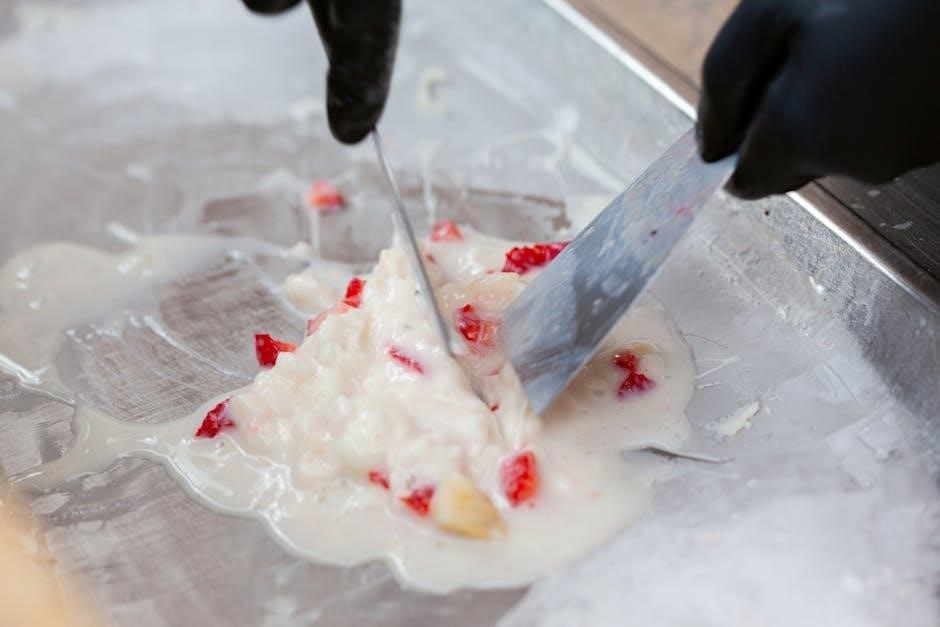
For exceptionally smooth ice cream, ensure your Rival ice cream maker’s canister is thoroughly frozen – a minimum of 24 hours is crucial. Properly chilling the ice cream base before churning is equally important; this prevents large ice crystals from forming.
Gradually adding the base to the machine during churning also contributes to a smoother consistency. Avoid rapid temperature fluctuations, and remember that fat content influences texture – richer bases yield creamier results!
Flavor Enhancement Techniques
Elevate your homemade ice cream with strategic flavor additions! Extracts, like vanilla or almond, should be added during the initial mixing of the base. For fruit flavors, consider using purees or finely chopped pieces, added during the last few minutes of churning;
Chocolate intensity can be boosted with melted chocolate or cocoa powder. Don’t be afraid to experiment with spices – a pinch of cinnamon or nutmeg can create delightful nuances. Remember, a little goes a long way!
Warranty Information
Rival ice cream makers are warranted against defects in materials and workmanship for a period of one year from the date of original purchase. This warranty covers normal household use and does not extend to damage resulting from misuse, abuse, or unauthorized repairs.
To obtain warranty service, please contact Rival customer support with proof of purchase. Modifications or alterations void this warranty. Specific terms and conditions may vary; consult the included warranty card for complete details.
Resources and Support
For assistance with your Rival ice cream maker, several resources are available. Explore online forums and communities dedicated to vintage and modern appliances for troubleshooting tips and shared experiences. Rival’s official website, though potentially limited for older models, may offer basic support documentation.
eBay listings and parts suppliers often host user-submitted guides and FAQs. Contacting appliance repair services specializing in small kitchen appliances can also provide expert assistance. Remember to have your model number ready when seeking support!